IRS Tax Debt Help in El Paso, TX
A garnished paycheck, a frozen account, or a lien against your home is not the start of a process. It is the end of one that began with letters. El Paso Tax Law responds to active federal collection, and the response is time-sensitive. Call (915) 465-9303 today.
The IRS Does Not Need to Sue You First
Ordinary creditors have to work for it. A credit card company that wants your wages must file suit, win a judgment, and obtain a garnishment order from a court. Every step is visible and every step takes months. That is not the position you are in with the IRS, which is why an IRS tax attorney in El Paso measures the response in days.
The Internal Revenue Service operates under different authority. Once a liability is assessed, a demand for payment has gone out, and the statutory notice sequence has run, the agency can levy administratively. No lawsuit. No judge. A notice goes to your employer or your bank, and they comply because federal law requires it. The first many people learn of it is a short paycheck or a declined debit card.
That authority is not unlimited, and the limits are where the work happens. The sequence has defined checkpoints, each carrying a deadline that grants you specific rights. The most important is the Final Notice of Intent to Levy and Notice of Your Right to a Hearing, usually delivered as Letter 1058 or LT11. It opens a 30-day window to request a Collection Due Process hearing. Filing that request suspends levy action while the case is heard, and it preserves the right to judicial review of the outcome. The Taxpayer Advocate Service explains the levy process and the taxpayer rights attached to each stage.
Miss the 30 days and you do not lose everything, but you lose the strongest tool. What remains is an Equivalent Hearing, which the agency will hold but which does not suspend collection and carries no right of appeal to the Tax Court. The difference between those two positions is decided by a postmark.
This is why the single most useful thing you can do before calling any firm is find the letters. Not the balance, not the year, the letters. Their numbers and their dates establish where you sit in the sequence, and everything else follows from that. The IRS maintains a plain-language explanation of what to do when a balance is owed, but it will not tell you which deadline is currently running against you.
Reading the Notice You Received

The letters escalate in a predictable order, and each one means something specific about how much time remains.
| Notice | What it means | Urgency |
|---|---|---|
| CP14 | First notice of a balance due after assessment | Respond, but no levy authority yet |
| CP501 / CP503 | Reminder notices, escalating in tone | Still early in the sequence |
| CP504 | Intent to levy state refunds and search for other assets | Serious. Often misread as the final notice |
| LT11 / Letter 1058 | Final Notice of Intent to Levy and right to a hearing | 30-day clock. Highest priority |
| CP90 / CP297 | Final notice variants for certain account types | 30-day clock |
| Letter 3172 | Notice of Federal Tax Lien filing | Lien is public. Appeal window open |
| Form 668-W | Wage levy served on your employer | Active. Money is being taken now |
| Form 668-A | Bank levy served on your institution | 21-day hold before funds transfer |
The CP504 trap
CP504 is the notice most often mistaken for the last one, because its language is alarming. It is not the final notice, and the 30-day hearing right has not yet opened. People frequently panic at CP504, do nothing after the panic subsides, and then miss the letter that actually mattered. If you have a CP504, you still have time. Use it.
Stopping Enforcement That Has Already Started
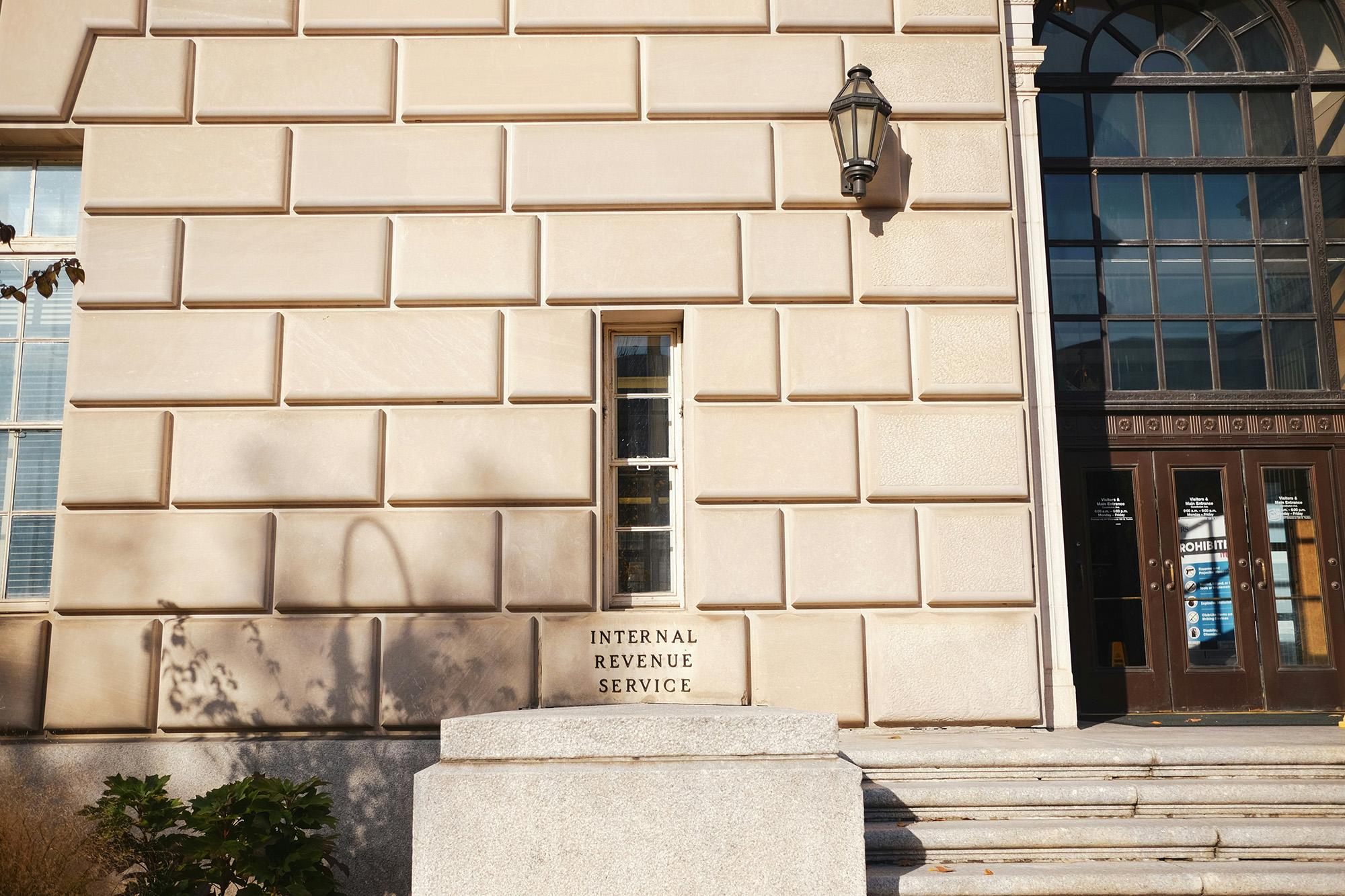

Each enforcement type has its own release mechanism, and they are not interchangeable.
- Wage garnishment. A wage levy is continuous, taking part of every check until released or the balance clears. The exempt amount is small and set by filing status and dependents, so most of the check is reachable. Release comes from establishing an alternative resolution or proving the levy creates economic hardship, which the IRS addresses in its guidance on releasing a levy. The hardship route can move in days when the documentation is ready.
- Bank levy. The bank freezes the balance and holds it for 21 days before sending it to the IRS. That window is the whole opportunity. It is enough time to file a release request supported by hardship or by an agreement, and it closes without extension.
- Federal tax lien. A lien is a claim against all your property, present and future, and it is recorded publicly. Full release follows payment or resolution, but two intermediate remedies are underused: discharge removes the lien from a specific property so a sale can close, and subordination lets a refinance lender take priority so the loan can fund.
- Asset seizure. Rare, and reserved for cases where other collection has failed, but it exists. Seizure of a vehicle or business equipment requires additional procedural steps, each of which is a point of intervention.
- Passport certification. A seriously delinquent tax debt can be certified to the State Department, which can deny a passport application or renewal. In a region where crossing the international bridge is part of ordinary life, this lands harder than it would elsewhere, and reversing certification requires an accepted resolution. The rules for passport revocation over unpaid taxes are published in full.
What Enforcement Looks Like on This Side of the State Line
Federal collection is uniform in law and uneven in impact, and the local pattern is distinct.
Because there is no state income tax here, a taxpayer in trouble is dealing with a single agency rather than a state revenue department running in parallel. That is genuinely simpler. The corresponding disadvantage is that no state withholding cushion exists to absorb a small federal shortfall, so underwithholding arrives in full at filing time and first balances tend to appear suddenly.
The cash-paid share of the local workforce changes what a levy does. A wage levy on a documented paycheck is calculable; the exempt amount is known. For a worker whose income is partly cash, a bank levy is far more destructive, because the account holds not only wages but the operating float of a small business. One levy can end a contracting operation that was otherwise solvent.
Passport certification carries disproportionate weight in a metro area where families, jobs, and medical care routinely sit on both sides of the border. A certification that would be an inconvenience in Kansas is a serious disruption here.
Property equity has become more relevant as local appraised values have risen. Equity supports a lien's value and counts in any collection calculation, so a homeowner in the county may find the IRS's position stronger than it was two years ago on an unchanged balance.
Releasing a Bank Levy Inside the 21-Day Window for a West Side Business
The Situation
A medical billing company operating near the North Mesa corridor had roughly $63,000 in unpaid payroll taxes accumulated across seven quarters. A Form 668-A bank levy froze just over $28,000, which was the account the company used to make payroll for eleven employees the following week. The owner had received the final notice four months earlier and had set it aside during a family medical emergency.
Our Approach
The engagement began nine days into the 21-day hold, leaving twelve days. A hardship release request was filed the same week, documenting that the frozen funds were committed to employee wages and that seizure would force immediate layoffs. In parallel, filing compliance was restored across the delinquent quarters and a full financial statement was assembled to support an installment agreement, so the release request arrived with a resolution attached rather than a plea.
The Outcome
The levy was released with two days remaining in the hold period and the full $28,000 was returned to the account. Payroll was met on time and no employee was laid off. The payroll tax balance was resolved through a 60-month installment agreement, and a trust fund recovery penalty assessment against the owner personally was avoided.
Client name changed. Results vary based on individual circumstances. Prior results do not guarantee similar outcomes.
What Happens in the First Week
- Same-day notice triage. The letters are read and the controlling deadline is identified. This determines everything that follows and takes one conversation.
- Power of attorney filed. Form 2848 goes in immediately, which routes IRS contact to the firm and stops calls to your home and workplace.
- Hold or hearing request. Where a deadline is live, the Collection Due Process request is filed to suspend levy action. Where a levy is already active, the release request goes in.
- Transcripts and compliance. Account transcripts are pulled and unfiled returns identified, because no release or agreement survives without filing compliance.
- Resolution attached. The release request is paired with a proposed resolution, which is what converts it from a request into an agreement.
Once enforcement is stopped, the matter moves to the resolution programs that settle the underlying balance. Where the file raises questions of privilege or personal liability, attorney representation governs. Enforcement reaches clients throughout the region, including the far east county and the west side, and the statewide guide covers how the process runs elsewhere in Texas.
Urgent Questions About IRS Enforcement
How quickly can someone stop the IRS from garnishing my paycheck?
Faster than most people expect when the file is ready. A wage levy release supported by economic hardship can be filed the day the firm is engaged, and the IRS can issue the release to your employer within days. What controls the speed is documentation, not persuasion. The agency needs a financial statement showing that the levy prevents you from meeting basic living expenses, and it needs your returns to be filed. If those are in hand, this moves quickly. If six years are unfiled, filing compliance comes first and the timeline extends. Either way, the answer arrives sooner if you call while the notice is current rather than after several pay periods.
If I ignore the notices long enough, does the debt eventually expire?
There is a statute, but treating it as a strategy is a serious mistake. The IRS generally has ten years from assessment to collect, after which the liability expires. The problem is what happens during those ten years. The agency will levy wages and accounts, file a lien against your property, and potentially certify the debt to the State Department affecting your passport. Certain actions also suspend the clock and extend it. Waiting out a ten-year statute while enforcement runs against you is not a plan. The statute date is genuinely important, but as an input to choosing a resolution, not as a substitute for one.
Which IRS office handles collection cases from this area?
Collection is not primarily a local-office matter, and this is worth understanding. Most cases are worked through the Automated Collection System, which is a centralized function reached by phone rather than a building you visit. Cases involving larger balances, businesses, or payroll tax are assigned to a revenue officer in the field, who may be local. Taxpayer Assistance Centers handle in-person service by appointment but do not negotiate resolutions. Practically, this means representation is not about proximity to an office. It is about who is assigned to your file and what has been documented for them.
The IRS froze my bank account. How much time do I have?
Twenty-one days from the date the bank receives the levy, and the clock is firm. During that hold the money stays in your account but is inaccessible to you. At the end of it, the bank sends the funds to the IRS. Everything that can be done has to happen inside that window, which is why this is the one situation where calling the same day genuinely changes the outcome. A release request supported by hardship documentation and paired with a proposed resolution is the mechanism, and it is achievable within the window when the engagement starts early enough.
Can the IRS take my house?
It is possible and it is rare. Seizing a primary residence requires approval from a federal district court judge, which is a materially higher bar than the administrative levy authority that reaches wages and bank accounts. The realistic risk is not seizure but the lien. A recorded federal tax lien attaches to the property, appears in a title search, and will stop a sale or a refinance from closing. That is the outcome that actually affects most homeowners, and discharge or subordination is often the practical answer rather than waiting for full release.
Will an IRS lien show up on my credit report?
Not directly anymore. The three major credit bureaus removed tax liens from consumer credit reports several years ago, so a lien no longer appears as a line item on your score. It remains a public record filed with the county, which means title companies, mortgage underwriters, and commercial lenders find it during due diligence. For anyone planning to sell property, refinance, or seek business credit, the lien is very much still there and still consequential.
Does the IRS ever show up in person?
A revenue officer assigned to a field case can visit a home or business, and it does happen with payroll tax matters and larger balances. Note that the IRS has substantially curtailed unannounced visits in recent years, which matters for a different reason: unannounced contact claiming to be from the IRS is now more likely to be an impersonation scam. Genuine collection begins with mailed notices. If someone appears demanding immediate payment by card or transfer, that is not the IRS. Once Form 2848 is on file, a legitimate revenue officer is directed to the firm rather than to you.
If money is being taken, the clock is already running.
Have your notices ready. One call establishes which deadline controls your case and what can still be stopped.